
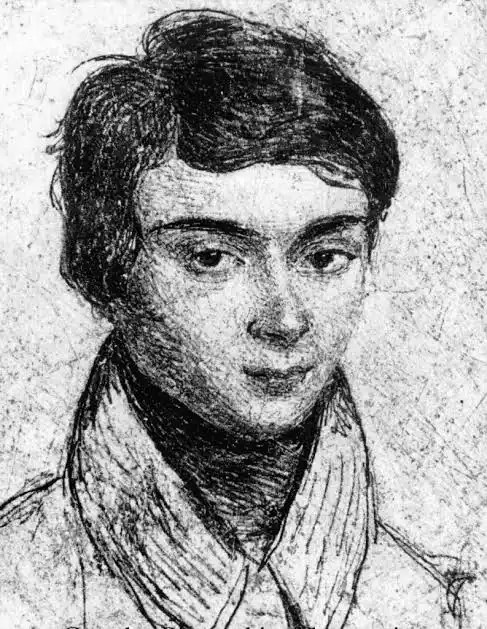
The field of abstract algebra, which explores the fundamental structures and operations underlying mathematics, has played a pivotal role in reshaping the way mathematicians perceive and solve problems. Among the many branches of abstract algebra, Galois Theory stands as a beacon of mathematical elegance and power. Named after the brilliant French mathematician Évariste Galois (25 October 1811 – 31 May 1832), who tragically met his untimely end at the age of 20, this theory has become an indispensable tool in understanding the symmetries and solvability of polynomial equations. Galois Theory emerged in the early 19th century, marking a profound shift in algebraic thinking, and has since become a cornerstone of modern mathematics. Putting aside the fact that Galois was 17 when he published this ground-breaking work, the work has continued influence in group theory and its application range from cryptography and coding theory (the study of error-correcting codes). In this article, we will delve deeper into the question of why there are no radical solutions for quintic equations (more generally, polynomials with degree 
The Abel-Ruffini theorem, named after mathematicians Niels Henrik Abel and Paolo Ruffini, was first published in 1799 and refined in 1824. It was the first of its kind to show that it was impossible to solve quintic polynomials algebraically in the sense that there was no general equation for solving such polynomials (however, solutions can still be found for such equations through methods such as Newton-Raphson iteration). This was a revelation at the time – given the easy solvability of quadratics with the quadratic equation (

Babylonian mathematicians as early as 2000 BC have explored how to solve quadratics, albeit not with the algebraic method we are accustomed with. The Babylonians used what is known as the “Babylonian tablet method” to solve quadratic equations. This method involved finding geometric shapes, such as squares and rectangles, whose areas were related to the coefficients of the quadratic equation.
For example, to solve the quadratic equation 


Through a series of geometric manipulations and measurements, the Babylonians were able to find approximate solutions to quadratic equations. While their methods may seem primitive by modern standards, they were remarkably effective and laid the foundation for later developments in algebraic techniques for solving quadratic equations. Building on this framework, by around the 9th century CE the quadratic formula was well established. However, the concept of a complex root was not defined so only real solutions were ever considered, with those with such solutions deemed unsolvable.
After the ancient Greeks had developed methods for solving quadratic equations primarily in geometric contexts, mathematicians in the Islamic world, such as Al-Khwarizmi and Omar Khayyam, made significant contributions to algebra during the Middle Ages. They further advanced the understanding of quadratic and cubic equations, although their approaches were often geometric or algebraic rather than purely algebraic. Later, in the Renaissance era, European mathematicians such as Viète and Descartes began to develop algebraic notation and methods that laid the groundwork for more systematic approaches to solving polynomial equations. These developments culminated in the work of Gerolamo Cardano, who, in the mid-16th century, published his method for solving cubic equations, which became known as Cardano’s formula. This marked a significant milestone in the history of algebra, paving the way for further advancements in the study of polynomial equations and laying the foundation for the emergence of modern algebra.
Cardano’s formula is a method for finding the roots of a cubic equation. The formula was first published by the Italian mathematician Gerolamo Cardano in his book “Ars Magna” in 1545. It is a fundamental result in algebra and was one of the key developments in the study of polynomial equations.
Cardano’s formula is a method for finding the solutions to a cubic equation, which is an equation of the form 

Cardano’s formula was first published by the Italian mathematician Gerolamo Cardano in his book “Ars Magna” in 1545.

This formula allows one to find the roots of any cubic equation, including those that do not have rational solutions. More interestingly, this introduced the concept of an imaginary number inside a square root resulting in a real number – this was never heard of at the time however this is not our main focus for this topic – for more details please see How it all began with the complex numbers by North Dakota State University.
Soon after, in the 16th century, the quartic formula was derived by mathematicians such as Lodovico Ferrari and Rafael Bombelli, following earlier work on solving cubic equations. The solution for quartic equations involves a combination of algebraic operations, including solving a depressed quartic (a quartic equation without the 
However, the quartic formula is considerably more complex than the quadratic and cubic formulas, and its practical utility is limited by the complexity of its solutions. In many cases, quartic equations are solved using numerical methods or approximation techniques rather than by applying the quartic formula directly.
So with all of this, we can start to observe why a generalized quintic equation might be unfeasible. With the formula becoming more and more complicated, it’s no wonder that at the quintic level it is impossible to produce such an equation – more mathematically, there are no expressions involving only algebraic functions that can express the solution.
To prove this here, we will utilize group theory, more specifically the sets relating the roots of the equation and the coefficients of the polynomial. We define the solutions of an 


We first note that switching the order of individual solutions does not affect the outcome of the polynomial as multiplication is commutative, i.e. 


Now with this we are able to rephrase our question – in fact our aim now is to prove that any general solution for a
For the set of the respective solutions, we note that we have two operations that we can carry out. The first of which are transpositions, which are carried out by exchanging the position of two solutions. Note we can have solutions exchanging positions with itself, which can be treated as an identity transformation. This is shown below :

The second operation we can carry out is a cycle, which exchanges the position of 3 solutions in a cycle as shown below.

We can first look at the solutions for a quadratic, i.e. the set 

We denote this commutator as 


Based on this result, we can look at the set of solutions of third and fourth order polynomials which follow from the same result. In particular, they represent what is called the 


The composition series of a group gives us a way to break down the group into simpler, normal subgroups. In the case of the symmetric group 

The significance of this composition series lies in the factor groups obtained at each step. The factor group 


Now, why does 
Galois Theory tells us that for a polynomial equation to be solvable by radicals (i.e., its roots expressible in terms of radicals and arithmetic operations), its associated group of symmetries must be solvable. Since
To conclude : the mathematics behind such a theorem is incredibly complicated yet elementary – involving a variety of different approaches from group theory stemming from an seemingly algebra-like question. I would recommend reading the below references for more information on the topic, and also the following book by Alekseev for a more comprehensive understanding of the work by Abel. Also as a side note : I will be updating this website monthly following a new schedule, so expect a new piece out every 15th at 11:00 a.m. GMT!
References :
Abel–Ruffini’s Theorem: Complex but Not Complicated! – Paul Ramond https://mathcenter.oxford.emory.edu/site/math108/abel/abels_impossibility_proof.pdf
Why you can’t solve quintic equations (Galois theory approach) – Mathmaniac
https://www.youtube.com/watch?v=zCU9tZ2VkWc
Why There’s ‘No’ Quintic Formula (proof without Galois theory) – not all wrong
https://www.youtube.com/watch?v=BSHv9Elk1MU
Leave a Reply