

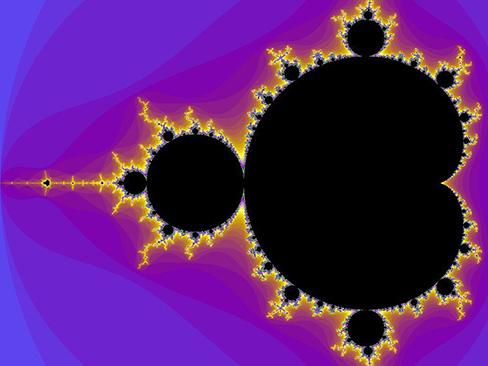
The study of resolving polynomials have long since been prominent in the ages of old Father Time. The Babylonians (about 400 BC) are often credited as the first solvers of the quadratic equation, and we are very familiar with the ways of resolving the roots through various methods that we have been educated with. In spite of this, the ancients have failed valiantly at an attempt to find solutions of polynomials of higher degrees, such as cubics and quartics. Although we now know that there are no general equation for solving polynomials with a degree bigger than 5 thanks to the Abel-Ruffini Theorem and Galois theory, general equations does exist for cubics and quartics, as proven and demonstrated by Gerolamo Cardano in 1545. These innovations were only made possible by the study of complex numbers, which are still regarded as one of the most important human inventions to date.
We may first start by considering the following equation 


The first recorded appearance of complex numbers was around 60 AD, when the Greek mathematician and engineer Hero of Alexandria presented a calculation involving the square root of a negative number. However, it was Cardano who started popularising the concept of such a number through the infamous Cardano’s formula for cubic equations.
The formula is as follows:


Monstrous, I know.
This is Cardano’s formula for solving cubics. Take the equation 
![x=\sqrt[3]{2+\sqrt{-121}}+\sqrt[3]{2-\sqrt{-121}}](https://s0.wp.com/latex.php?latex=x%3D%5Csqrt%5B3%5D%7B2%2B%5Csqrt%7B-121%7D%7D%2B%5Csqrt%5B3%5D%7B2-%5Csqrt%7B-121%7D%7D&bg=ffffff&fg=000&s=0&c=20201002)
However, as we might observe, there are negative numbers inside the square root. However, if we calculate it using 

Complex roots are also crucial to completely factorising a polynomial. Take the polynomial 

The function can now be completely factorised as 
Unit circles utilising complex numbers
Complex numbers also appears in the famous Euler’s equation 


Complex analysis is a predominant topic in the study of complex numbers, and links topics seemingly unrelated such as number theory and analytic combinatorics together. It heavily employs complex numbers to create modelling functions of real-life phenomenons such as periodic motions (water, light waves, etc.) and particle movement. Then, through complex analysis, we can solve the equation and predict the movement of the wave or the particle. These give insight into studies of fluid mechanics, particularly the Navier-Stokes equation, one of the seven unsolved Millennial Problems. These models are of enormous use in applied maths and physics, as they give insight into how to pump oil in oil rigs, how earthquakes shake buildings and when tides might arrive, and Contour integration, a direct cause of complex analysis, is also heavily featured in the study of inertial navigation and is the fundamental backbone of the Nyquist stability criterion, which is a graphical technique for determining the stability of a dynamical system. This is massively employed in electronics, where it is crucial to understand whether a system is stable or not.
Complex analysis is also the foundation of another Millennial Problem, the Riemann hypothesis. This is a problem concerning the non-trivial zeros of the Euler-Riemann zeta function, which is defined as follows :

For example, if we input 2 into the Riemann zeta function, we would obtain 


This is closely linked to number theory and the twin prime theorem, where it is stated in the Heath-Brown theorem if the conjecture was proven true, there must be infinitely many twin primes due to the non-existence of Siegel zeros1.
The study of complex numbers are also fundamental to understanding motions of particles and occurs quite naturally in the study of quantum physics. The wave function, usually denoted by 𝚿, assigns a complex value to each point 

The equation relates the collection of probability amplitudes that pertain to one moment of time to the collection of probability amplitudes that pertain to another. This allows for a calculation of a pathway the particle in question might take, which grants better understanding of particles overall. It also led to the famous Heisenberg uncertainty principle, and helped physicists understand how things work at a subatomic scale, completely departing from classical mechanics of which we are so used to.
Fourier Transform (FT) is another field of which complex numbers are required heavily. FTs uses integration to find the centre, or rather an average mean of all points in a complex plane, and is able to separate a superposition of frequencies into a graph which shows obvious peaks when the numbers match one of the original frequencies.

The Fourier Transform integral
FFT (Fast Fourier Transform) is an extremely powerful tool built on Discrete Fourier Transforms (DFT) and much used in forensics and computer programs to identify individual frequencies of a certain recording, but is much faster than the original FT integral, due to the easy adaptability of the function to create an inverse of itself. In sound editing, the program can automatically recognise frequencies of notes played and return the notes played. This allows for editing tones by increasing or decreasing frequencies, and notes can be easily added or removed by applying a spike at the corresponding frequency and applying the Inverse Fourier Transform (IFT) to the function.
JPEG image compression also makes use of FFTs to compress images. It works by distorting some of the highest frequencies in the image which the human eye is less sensitive to.
Suppose we start with a grayscale image, which is represented as a matrix where each entry is an integer between 0 (black) and 255 (white). The encoding process works by taking the FT of the JPEG image, and the matrix will reduce greatly in size due to the non-zero entries being concentrated in the top left of the matrix. This allows for an easier compression of images as zero entries can be compressed easily.


A graph of how Discrete FTs work, however periodic summation is used here instead of integration (Credit : Wikipedia)
FTs are also utilised in large-integer multiplication algorithms and polynomial multiplication. If we wanted to multiply two large integers A and B of size N, we could first transform them into their polynomial coefficient representation on base 

Additionally, the analysis of electrical circuits makes use of complex numbers to describe sinusoidal current and voltages, and the mathematics of complex numbers can be applied to AC currents and voltages. To simplify the process of adding together voltages of AC currents for example, we might resort to describing it in terms of a complex function. Since complex numbers can be represented in terms of sine and cosine functions, by only taking the real value of the function, we are able to obtain the cosine output easily and simplify calculations as a result. For example, sinusodial currents must be converted to polar form in order to carry out additions of circuits. An addition voltages in phasor form, for example the addition of 


This can be further extended to the calculation of electrical reactance, a measure of resistance of a change of current, where a complex value of voltage and current is supplied in a calculation of AC circuits.

The formula for Electrical Reactance
In conclusion, the journey of complex numbers from their humble origins to their profound impact on the modern world is a testament to the power of human ingenuity and the timeless pursuit of understanding the intricacies of mathematics. The invention of complex numbers by mathematicians like Cardano, Bombelli, and Euler marked a pivotal moment in the history of mathematics, as it expanded our understanding of numbers beyond the constraints of real quantities. Through their evolution, complex numbers have transcended their theoretical origins to become indispensable tools in various scientific and engineering disciplines.
Today, complex numbers find applications in fields as diverse as electrical engineering, quantum mechanics, fluid dynamics, and signal processing. They provide the mathematical framework for solving problems that were once deemed unsolvable and enable us to describe phenomena that were previously elusive. From designing efficient electrical circuits to simulating quantum systems, complex numbers have become an essential part of our technological advancements.
In essence, the invention and application of complex numbers have opened doors to new realms of understanding and problem-solving, shaping the course of human knowledge and innovation. As we continue to explore the vast potential of these enigmatic numbers, we can only anticipate that they will play an increasingly significant role in unraveling the mysteries of the universe and in the advancement of human civilization. Complex numbers, born from the minds of visionary mathematicians, continue to inspire us to push the boundaries of what is possible and to embrace the beauty of mathematical elegance in the modern world.
- Siegel zeros are values which are very close to 1 and return 0 when inputted into the Riemann zeta function, but are neither trivial or non-trivial zeros, in other words a counter example to the Riemann hypothesis. However, a recent breakthrough by Yitang Zhang is very close to disproving the existence of such numbers. ↩︎
- In physics,
is often used instead of
Leave a Reply