

Calculus – The type of mathematics that deals with rates of change, for example in the slope of a curve or the speed of a falling object.
Oxford Learner’s Dictionary
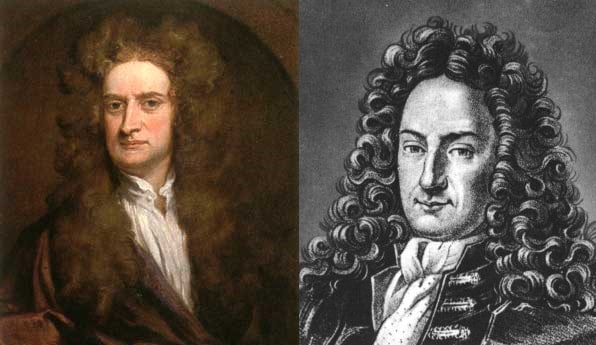
Although this definition would have been accurate at Newton or Leibniz’s time, there is no doubt it has since fallen short of the sheer scope of which modern-day calculus encompasses. From Fast-Fourier Transforms (FFTs) used in audio visualisations to Navier-Stokes equations modelling fluid dynamics, there is no aspect of mathematics which is more influential than calculus – it has defined modern mathematics and has established the basis of our technology. In this article, we will look at the basic building block of calculus – limits – and how they may be applied to solve real-life problems.
The official notation for a limit may be represented as follows : 


The fundamental idea of limits stems from the fact that certain functions cannot be analytically calculated at certain points. For example if we wished to know what the behaviour of the function 


∴


To better understand this, we may take 


In this example, we may consider the area of △ABD (


As the upper limit of the inequality is 1 and the lower limit 
Now, to deem a function linearly continuous, the value of a certain point must be equal when approached from both sides – namely 
Now, we can use this to estimate a slope of a function at a certain point. To start, let us take a look at a graph of a function, namely a quadratic of the form 

What could I do to find the slope of the equation at (2, 1)? First, we may recall the general equation of a slope between two points : 


Using this logic, we can choose a much closer point to (2, 1) to obtain a very close approximation to the actual tangent. This can be generalised by the 


This formula is coined the first principles of differentiation, as it uses algebra as a basis for differentiation and allows for further development of calculus way beyond the scope of finding slopes. Now, we can utilise this formula to find the exact slope of the function at (2, 1) through substitution.
Example I : Find the equation of tangent at the point (2, 1) of the function 
By first principles:
![\frac{d}{dx}f(x)=\lim_{\Delta{x}\rightarrow0}\frac{[\frac12(x+\Delta{x})^2+(x+\Delta{x})-3]-[\frac12x^2+x-3]}{\Delta{x}}](https://s0.wp.com/latex.php?latex=%5Cfrac%7Bd%7D%7Bdx%7Df%28x%29%3D%5Clim_%7B%5CDelta%7Bx%7D%5Crightarrow0%7D%5Cfrac%7B%5B%5Cfrac12%28x%2B%5CDelta%7Bx%7D%29%5E2%2B%28x%2B%5CDelta%7Bx%7D%29-3%5D-%5B%5Cfrac12x%5E2%2Bx-3%5D%7D%7B%5CDelta%7Bx%7D%7D&bg=ffffff&fg=000&s=0&c=20201002)
![=\lim_{\Delta{x}\rightarrow0}\frac{[\frac12x^2+\frac12(\Delta{x})^2+\frac12(2x\Delta{x})+x+\Delta{x}-3]-[\frac12x^2+x-3]}{\Delta{x}}](https://s0.wp.com/latex.php?latex=%3D%5Clim_%7B%5CDelta%7Bx%7D%5Crightarrow0%7D%5Cfrac%7B%5B%5Cfrac12x%5E2%2B%5Cfrac12%28%5CDelta%7Bx%7D%29%5E2%2B%5Cfrac12%282x%5CDelta%7Bx%7D%29%2Bx%2B%5CDelta%7Bx%7D-3%5D-%5B%5Cfrac12x%5E2%2Bx-3%5D%7D%7B%5CDelta%7Bx%7D%7D&bg=ffffff&fg=000&s=0&c=20201002)


Substituting 

This is the slope of the function at the point (2, 1).
Equation of the tangent :


As we can observe in the example, the operator 


Using differentiation, we are also able to easily locate turning / stationary points of a function. These are the maximum or minimum points of a function. Take the function 


This indicates that the turning point of the function occurs at 


Hence, we know that the turning point of the function is located at the coordinates (
We can also determine the nature of the turning point, i.e. whether it is a maximum or minimum point through taking the second derivative of the function, notated as 
- If
, it is a minimum point.
- If
, it is a maximum point.
- If
Using all of this, we can now apply differentiation in real-life situations to solve different problems. Below are a few examples :

(Columbia University Calculus III Final 2013)
To solve this problem, we must first identify the relevant variables in the question, namely the radius 

Volume =

Surface area =

We can thus substitute the first equation into the second equation and obtain an equation for surface area entirely dependent of height.
Surface area = 

Now, in order to minimise surface area, we can take the differentiation of the equation with respect to radius and set 


![r^3=100 \longrightarrow{r}=\sqrt[3]{100}](https://s0.wp.com/latex.php?latex=r%5E3%3D100+%5Clongrightarrow%7Br%7D%3D%5Csqrt%5B3%5D%7B100%7D&bg=ffffff&fg=000&s=0&c=20201002)
We can then substitute the value back into the original equation to obtain the height.
![{h}=\frac{100}{r^2}=\frac{100}{(\sqrt[3]{100})^2}=\sqrt[3]{100}](https://s0.wp.com/latex.php?latex=%7Bh%7D%3D%5Cfrac%7B100%7D%7Br%5E2%7D%3D%5Cfrac%7B100%7D%7B%28%5Csqrt%5B3%5D%7B100%7D%29%5E2%7D%3D%5Csqrt%5B3%5D%7B100%7D&bg=ffffff&fg=000&s=0&c=20201002)
In conclusion, we’ve explored the fascinating world of limits and differentiations in calculus. We’ve delved into the fundamental concepts that underpin this branch of mathematics, from the intuitive idea of a limit to the precise techniques of differentiation. Hopefully, you’ve gained a deeper understanding of how calculus plays a pivotal role in analyzing change and motion.
But our journey through calculus is far from over. In our next installment, we’ll shift our focus to the counterpart of differentiation – integration. Just as differentiation helps us dissect complex functions and understand rates of change, integration enables us to piece together the pieces of information and find the cumulative effects over an interval.
So, stay tuned as we venture into the world of integration, where we’ll explore the concept of the integral, different techniques of integration, and its practical applications in various fields. Calculus is a powerful tool with immense relevance in science, engineering, economics, and beyond, and our exploration is just getting started.
Thank you for joining us on this mathematical journey, and I look forward to unraveling the mysteries of integration with you in our next article. Until then, keep exploring, keep learning, and keep pushing the boundaries of your mathematical knowledge!
- It is important to note that
. ↩︎
Leave a Reply